

🌐 Read this article in your language
🇩🇪 🇫🇷 🇪🇸 🇮🇹 🇯🇵 🇨🇳
🇸🇦 🇮🇳 🇧🇷 🇰🇷 🇬🇷 🇳🇱
Access eTurboNews in 103 languages.
Choose your language →
The global travel and tourism industry has no shortage of leaders, awards, international summits, or exclusive networking clubs. Some organizations represent businesses that shape the global visitor economy. Others sell access, visibility and the opportunity to be recognized. The World Travel & Tourism Council (WTTC) has an established advantage, but its emerging relevance to SMEs, governments and destinations raises a more interesting question: Could it become the meeting point for a fragmented global tourism industry without becoming another organization competing for attention?
When tourism leadership becomes a business model
Tourism leadership has become a business in its own right.
Across the international travel industry, organizations compete to attract CEOs, ministers, investors, destination executives and entrepreneurs to conferences, private dinners, leadership clubs and award ceremonies.
The promise is familiar: international recognition, access to influential people, high-level networking and opportunities to shape the future of tourism.
For some participants, these opportunities produce real business. For others, they offer something less tangible but equally attractive: status.
There is nothing inherently wrong with either.
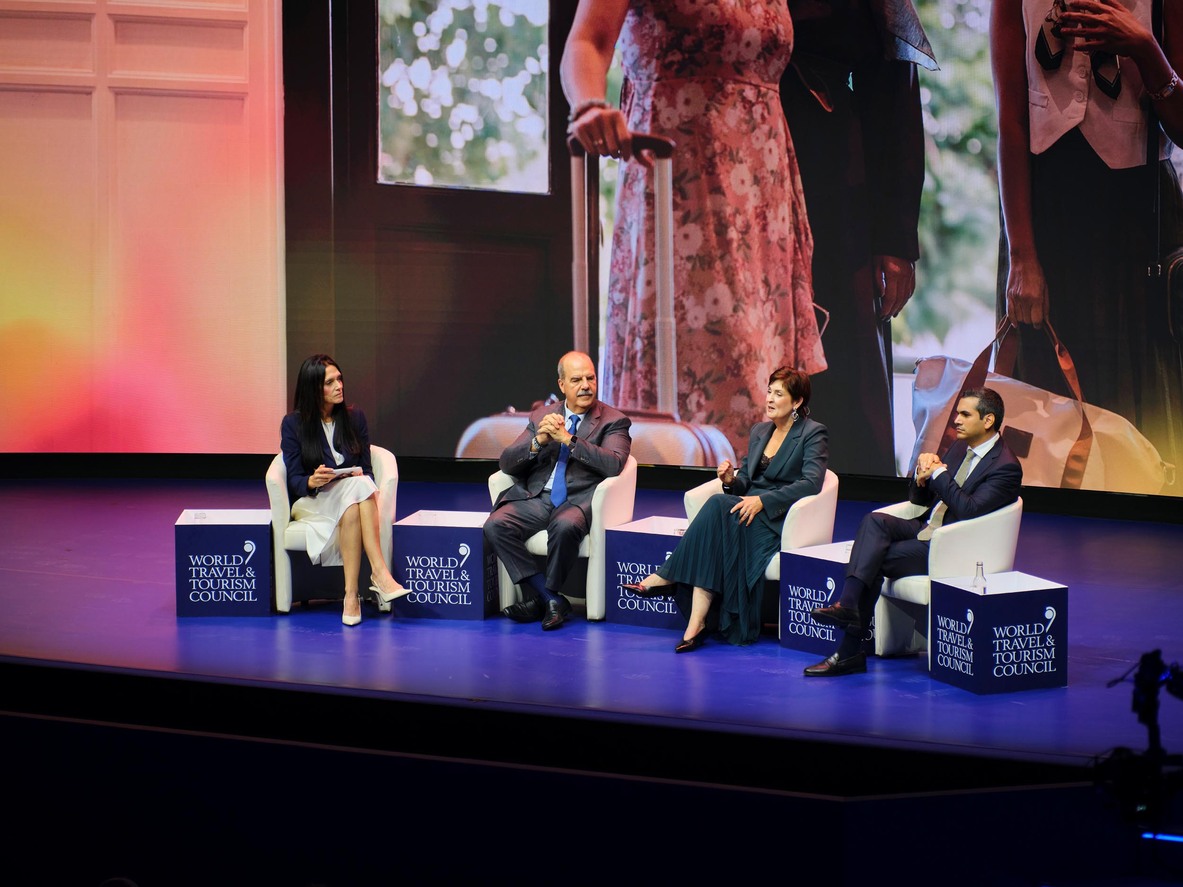
WTTC Targets One Million Tourism SMEs to Benefit from its Together in Travel Community
WTTC Targets One Million Tourism SMEs to Benefit from its Together in Travel Community
Tourism depends on personal relationships. A chance meeting at an international summit can result in investment, cooperation, or a new market opportunity. Recognition can help talented professionals gain visibility beyond their immediate networks.
But an important question is increasingly overlooked.
Who is actually shaping global tourism, and who is primarily creating a business around the desire to be recognized as a leader?
The answer is not always reflected in conference attendance, membership prices or impressive titles.
WTTC’s advantage: Its members were influential before they joined
The World Travel & Tourism Council (WTTC) occupies an established position in this competitive landscape.
Founded in 1990, WTTC was created to strengthen the collective voice of the travel and tourism private sector. Its membership includes senior executives from major international companies in hospitality, aviation, cruising, travel technology and related sectors.
These businesses operate hotels, transport networks, travel platforms and other services used by millions of travelers.
WTTC is a membership organization, and membership has a commercial cost. Its summits also provide networking, visibility and opportunities for senior executives to engage with policymakers.
In that respect, it participates in the same international marketplace for influence as other industry organizations. The distinction is where its influence originates.
The executives representing major global travel businesses generally arrive with established corporate responsibilities, significant investments and recognized commercial influence.
Their status does not depend on receiving a leadership certificate or being featured in a magazine.
That does not make every WTTC initiative successful or every corporate leader visionary. Nor does it mean that the largest companies always have the best answers.
But it gives WTTC a foundation that cannot easily be reproduced by creating a new CEO club, launching an awards program or organizing an expensive conference.
Its economic impact research adds another dimension. Governments, investors, and destination organizations use tourism economic data to understand the sector’s contribution to employment, GDP, and development.
That gives WTTC a role extending beyond the networking business.
The more interesting development: WTTC is looking beyond the biggest companies
Historically, WTTC has been associated with the industry’s largest corporate players.
That has been both its strength and a limitation.
Global hotel groups, major airlines and multinational travel businesses have the resources to influence international policy. But small and medium-sized enterprises deliver much of tourism’s daily activity.
Independent hotels, destination management companies, tour operators, attractions, travel agencies, restaurants and local tourism entrepreneurs form the operational backbone of destinations worldwide.
They often lack access to the research, international networks and policymaking discussions available to large corporations.
WTTC’s efforts to broaden access to research and engage smaller businesses therefore deserve attention.
For SMEs, the most valuable benefit may not be a seat at a glamorous dinner. It may be access to credible economic information that helps them understand market developments, demonstrate their importance to policymakers or make better business decisions.
For a small tourism company, reliable research can be more useful than an international leadership award. There is also a potential benefit for governments and destination partners.
A government seeking to discuss tourism investment, aviation connectivity, destination development or sustainable growth often needs several different private-sector decision-makers involved in the same conversation.
WTTC’s established relationships enable it to help convene those interests.
Rather than approaching hotel groups, airlines, technology companies and other tourism businesses separately, a destination may be able to use WTTC’s network to bring relevant stakeholders together. This is where the Council’s position becomes particularly interesting.
Its future value may depend less on the exclusivity of its membership and more on its ability to make that network useful to a wider tourism economy.
The important questions are practical: Which SMEs can access research, under what conditions, and how easily can governments and destinations translate introductions into concrete partnerships? Those answers will matter more than another declaration of global leadership.
Malta 2026: Evidence of a broader direction
The 2026 WTTC Global Summit in Malta provided concrete examples of this evolution.
On October 8, WTTC announced an ambition to support one million tourism SMEs through its Together in Travel community, offering free research and knowledge, practical guidance, advocacy and opportunities to connect with industry experts.
The Council is developing a free platform for smaller businesses, although the full extent of its eventual services and adoption remains to be demonstrated.
The economic argument is substantial. WTTC research presented in Malta suggested that a 10% productivity improvement among tourism SMEs could generate an additional US$63 billion in direct tourism GDP across eight major economies. This was an illustrative scenario, not a forecast.
The initiative also builds on an October 2 agreement with the International Chamber of Commerce (ICC), whose wider business network spans more than 45 million companies in over 170 countries.
The partnership is intended to combine WTTC’s tourism research and advocacy with ICC’s broader business reach, addressing barriers to finance, technology, regulation and growth.
This is a more convincing demonstration of leadership than simply expanding a list of honorary titles.
It is also not without challenges. Making research available is one thing; ensuring that a small hotel owner, local tour operator or independent destination entrepreneur can understand and use it is another.
The Council’s progress should ultimately be measured by participation, accessibility and outcomes rather than announced ambitions.
World Tourism Forum Institute and the commercial market for prestige
The World Tourism Forum Institute (WTFI) illustrates another approach to building an international tourism network.
Its advertised annual membership packages, according to materials reviewed for this article, cost $5,000 for individuals and $10,000 for corporate participants.
Benefits include access to VIP networking opportunities, a CEO Club, executive profiles, speaker opportunities, membership badges, and publishing opportunities through WTFI Live and World Magazine. The offering combines business development with visibility and personal branding.
That can be attractive to professionals who do not already have access to international industry networks.
There is a legitimate market for such services, just as there is for executive education, professional associations and commercial conferences.
However, when visibility, editorial exposure and networking privileges appear together in a paid membership package, questions arise about how independent recognition is distinguished from commercial participation.
That is not an allegation that awards or editorial judgments are for sale. It is a question of transparency and the meaning audiences attach to recognition. An expensive membership can create access. It cannot guarantee professional authority.
And a leadership award, however impressive its presentation, should ultimately be judged by the achievements it recognizes.
The same standard should apply to WTTC and every other industry institution. WTTC itself offers member visibility, exclusive events and sponsorship opportunities. Its established standing does not exempt it from scrutiny over how access and influence operate.
The organizations that serve a purpose without claiming to lead everyone
Tourism does not need every organization to become another WTTC.
The Pacific Asia Travel Association (PATA) has a regional focus and a history of supporting Asia-Pacific tourism.
Destinations International serves destination organizations through professional development, advocacy, and destination management expertise.
The American Society of Travel Advisors (ASTA) represents travel advisors, while the United States Tour Operators Association (USTOA) focuses on tour operators’ interests.
Skål International has built professional relationships across the industry over generations.
IGLTA advocates for LGBTQ+ travel inclusion and business development.
These organizations have specific constituencies and areas of expertise. Their success should not be measured by whether they can attract the same corporate CEOs as WTTC.
The World Tourism Network (WTN) represents another kind of effort, seeking to elevate the voices of smaller businesses and tourism stakeholders without the financial resources of major multinational companies.
Some of the most committed tourism advocates operate without prestigious headquarters, extensive conference budgets, or internationally recognized leadership titles.
They may spend years pursuing regulatory changes, improving accessibility, supporting community tourism or helping independent businesses survive.
Their work may generate little publicity, yet their contributions can be significant.
This is precisely why leadership recognition should not become a competition determined primarily by financial resources.
UN Tourism, governments and the missing connection
UN Tourism occupies a separate institutional position as the United Nations specialized agency for tourism.
Its role is intergovernmental, bringing countries together on tourism policy, development and cooperation.
WTTC represents a private-sector perspective, although its membership and partnerships also extend to destinations and other stakeholders.
Neither organization can replace the other.
The question is how effectively government priorities, corporate investment decisions and the needs of smaller tourism businesses can be connected.
WTTC has already developed mechanisms for this kind of cooperation.
Its Global Leaders Dialogue in Malta on October 7 brought together ministers and business leaders from 24 countries to discuss competitiveness, connectivity, investment and regulatory challenges.
Its August 2026 agreement with the World Governments Summit Organization also established a framework for stronger cooperation between corporate leaders and government policymakers.
WTTC’s destination partnerships and its existing government engagement provide another route for convening relevant decision-makers.
For a destination seeking new air services, hospitality investment, or sustainable tourism development, bringing the right executives and public officials into one room can have real value. But convening people is only the beginning.
A successful outcome might be a new investment commitment, a practical policy reform, improved connectivity or a partnership benefiting local businesses.
A conference photograph is not an outcome.
The media-hungry leader and the leader who produces
Tourism has no shortage of personalities who enjoy being introduced as international leaders.
Some individuals’ calendars seem to consist almost entirely of summits, awards, panel discussions, and networking receptions.
There are also ministers, executives, entrepreneurs and advocates who rarely appear on international stages because they are occupied with operating businesses, solving problems and developing new ideas.
Both groups can contain capable professionals. Public visibility is not proof of superficiality, just as a low profile is not proof of achievement.
But the industry should be careful not to confuse the ability to promote oneself with the ability to lead.
A successful tourism leader might develop a new airline route, create hundreds of jobs, protect a vulnerable destination, build an innovative travel company or persuade a government to remove an unnecessary barrier.
Those contributions deserve attention, whether or not the individual can afford an expensive conference ticket.
Media organizations also have a responsibility here.
Coverage should distinguish between independently earned achievements, commercial partnerships, sponsored profiles, and promotional awards. The question should not merely be who received recognition, but why.
WTTC’s opportunity — and its responsibility
WTTC has a head start that few competing organizations can match: a long-established corporate membership base, economic research capabilities and access to senior business and government leaders.
Its recent SME initiatives and broader partnerships suggest an effort to use those advantages beyond its traditional constituency.
That is potentially more important than adding another exclusive membership category or launching another international awards program.
Still, it would be premature to declare that WTTC has brought the entire tourism industry together.
Its SME ambitions need measurable results. Its partnerships must produce outcomes. Its research must remain credible and accessible. And its corporate members must recognize that tourism’s long-term success depends on businesses and communities far beyond the world’s largest companies.
WTTC does not need to compete for recognition on the same terms as newer networking organizations. It already has an established institutional position.
What it does need is to demonstrate that its convening power benefits the wider industry.
The global tourism sector has room for established associations, specialist advocates, commercial networking platforms and new ideas. They do not all need to compete for the same global-leader title.
But the distinction between influence and visibility should remain clear.
Money can buy a conference ticket, an impressive badge and a place in a room. It cannot, by itself, buy the achievements that make people worth listening to.
WTTC’s leadership position is strongest when it turns the influence already present among its members into opportunities for governments, destinations, SMEs and the broader travel economy.
That is a more meaningful measure of leadership than recognition itself.
