
🌐 Read this article in your language
🇩🇪 🇫🇷 🇪🇸 🇮🇹 🇯🇵 🇨🇳
🇸🇦 🇮🇳 🇧🇷 🇰🇷 🇬🇷 🇳🇱
Access eTurboNews in 103 languages.
Choose your language →
US tourism is paying a growing economic price as international visitors stay away, billions of dollars in spending are lost, and confidence in the United States as a welcoming destination weakens.
With the November 3 midterm elections approaching, this is no longer merely a political debate. For Americans working in hotels, restaurants, airlines, tour operations, and destination businesses, international tourism can mean the difference between prosperity and survival.
This publisher has a personal appeal and a warning to his fellow Americans:
Take the economic consequences of government policy seriously. The future of an industry, and the reputation of the country it represents, deserve attention at the ballot box.
The Numbers Should Alarm Every American Tourism Professional
According to the October 22 Financial Times investigation, overseas arrivals to the United States fell 5.7% during the first nine months of 2026. Western European arrivals declined 8.7%.
The World Travel & Tourism Council estimates that international visitor spending in the United States fell by approximately $8.4 billion in 2025 compared with 2024.
Even the FIFA World Cup did not produce a sustained recovery.
President Trump wants to attract 100 million international visitors annually by 2030. Yet the United States received only 68.3 million international visitors in 2025.
Behind those numbers are American workers and business owners. Every canceled vacation can mean fewer hotel bookings, restaurant meals, airport transfers, excursions, and shopping purchases.
Strong domestic travel helps, but it cannot replace every lost international customer.
For small tourism businesses operating on narrow margins, declining international demand can become a question of survival.
Americans Are Still Among the Most Welcoming People in the World
One distinction is essential: the American people are not the problem.
Americans have long been among the world’s most welcoming people. European visitors, in particular, frequently appreciate an openness, friendliness, and easygoing atmosphere that can be difficult to find in Europe.
The spontaneous conversations, willingness to help strangers, and genuine interest in visitors remain among the greatest strengths of US tourism. That welcoming spirit has not disappeared.
What has changed is the international perception of the United States under the Trump administration.
Imagine a German family choosing between Florida and Spain, a Canadian couple considering New York or Paris, or an Asian business traveler deciding between Los Angeles and Singapore.
If those travelers believe they might face hostility, unpredictable immigration procedures, or intimidating border questioning, they may simply choose another destination.
That is the tragedy for US tourism: Americans have not lost their welcoming spirit, but government policies and political rhetoric risk convincing the world otherwise.
The decision not to visit is made long before a traveler encounters the warmth of an American hotel receptionist or restaurant owner.
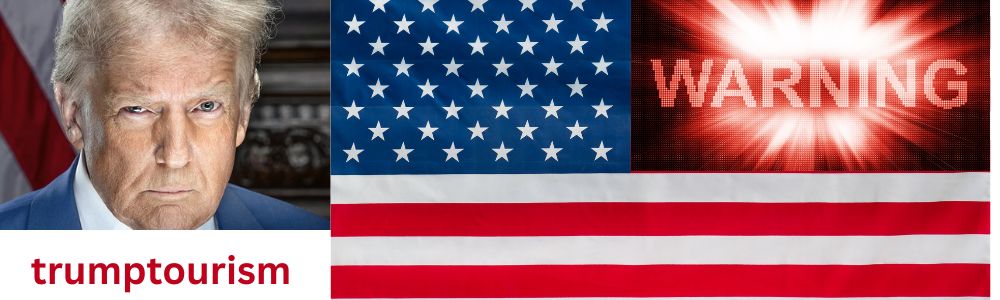
Trump Tourism : Join the Fight | Trump Tourism
Travel from and to the United States and the industry behind has changed under US President Donald Trump. There are new challenges, expectations, and regulations.
Border Anxiety: Perception, Not Reality for Most Visitors, Is Hurting US Tourism
The overwhelming majority of international visitors arriving in the United States enter without significant problems. For most travelers, immigration and customs procedures are routine, professional, and uneventful.
But tourism is not driven by statistics alone. Tourism is driven by perception, confidence, and feeling welcome.
Even if nine out of ten visitors experience no difficulties entering the United States, reports of travelers being detained, questioned extensively, having electronic devices searched, or facing unexpected visa complications can create anxiety far beyond the relatively small number of people directly affected.
According to the Financial Times, electronic-device searches at US borders increased 33% during the nine months ending June 2026. LATAM Airlines CEO Roberto Alvo described how uncertainty over entry permissions can discourage entire families from booking US vacations.
These incidents do not represent the everyday experience of most international visitors. Nor do they reflect the warmth and hospitality that travelers typically encounter once inside the United States.
However, the Trump administration’s immigration enforcement policies, confrontational political rhetoric, and strained relationships with traditional international partners have contributed to concerns about whether foreign visitors will feel welcome.
Travel costs, exchange rates, and changing preferences also influence tourism demand. Not every lost visitor can be attributed to government policy.
But a traveler does not need to experience an unpleasant encounter at a US border to decide against visiting. The fear that it might happen can be enough.
A German family planning its annual vacation is unlikely to calculate the statistical probability of an uncomfortable immigration interview. It may simply choose Spain instead.
This is the challenge facing US tourism. The country may remain welcoming in everyday reality, but negative international perceptions can influence travel decisions long before visitors ever board an aircraft.
No multimillion-dollar tourism advertising campaign can fully compensate for a loss of confidence.
The real challenge is not convincing Americans to welcome visitors. They already do. It is convincing the world that it can still count on that American welcome.
Nick Adams: An Alpha Male Who Blocked eTurboNews?
The Trump administration appointed Australian-born conservative influencer Nick Adams as a diplomatic envoy for American tourism.
Adams describes himself as an “alpha male” and has publicly expressed strong loyalty to President Trump.
Mr. Adams blocked eTurboNews on LinkedIn after the publication asked him tough questions—an interesting response from someone who proudly presents himself as an “alpha male.”
In a statement attributed to his X account this week, Adams declared: “I would crawl over broken glass and swim through a pool of piranhas and crocodiles to vote Republican up and down the ballot this November.”
He also attributed prospective Republican victories to Trump’s leadership while suggesting that defeats would reflect candidates failing to embrace the president sufficiently.
These statements raise questions about the distinction between promoting the United States internationally and promoting political loyalty.
Adams has acknowledged that tourism boycotts hurt American small businesses. He has also proposed hospitality training for border personnel.
Better customer service is welcome. But teaching border officers to smile cannot resolve every concern created by immigration policy.
The Economic Damage Does Not Recognize Party Lines
A Republican hotel owner in Florida and a Democratic restaurant owner in New York face the same economic reality when international visitors disappear.
So do tour guides in Nevada, family-owned attractions in Hawaii, independent hotels in California, and transportation operators nationwide. Tourism revenue supports communities regardless of political affiliation.
The Financial Times quoted one tourism official describing the years before the 2028 presidential election as a period focused on survival.
That is a troubling assessment for an industry that should be planning growth rather than calculating how long it can endure declining international demand.
Patriotism Is Loyalty to the Constitution, Not a President
As an American travel and tourism professional, I consider myself colorblind in how I value people and a global citizen in how I understand the world.
My belief in the United States rests on its Constitution, democratic institutions, diversity, and ability to welcome people from every corner of the planet.
A president is elected to serve the American people. The American people do not exist to serve a president.
Critics of the Trump administration argue that demands for personal loyalty and attacks on institutions threaten democratic norms. Supporters contend that its policies protect sovereignty and strengthen national security.
The tourism industry has a particular responsibility to examine the practical consequences of those competing approaches.
Border security and genuine hospitality are not mutually exclusive. Nor should national pride require hostility toward international partners.
November 3: What Is at Stake for US Tourism and the World?
The midterm elections will determine the composition of Congress and influence oversight of the Trump administration.
For tourism professionals, important questions include whether candidates support predictable visitor-entry procedures, constructive international relations, tourism investment, small-business protection, and meaningful government accountability.
No election result can instantly recover billions in lost visitor spending. Rebuilding international trust requires consistent action over time.
But democratic participation gives Americans a voice in the policies that affect their businesses, communities, and relationships with the world.
International tourism is also about more than economics. It connects people, challenges stereotypes, creates friendships, and strengthens understanding between nations.
When confidence in visiting the United States declines, those human connections are weakened as well.
A Personal Plea: The Future of US Tourism Deserves Your Vote

How, when, and where to vote | USAGov
Find out if you can vote. Get ID requirements. Learn about voting in person, early, or absentee.
For Americans whose livelihoods depend on travel and tourism, the November elections carry immediate economic significance.
This industry cannot survive on political slogans. It needs international confidence, fair treatment of visitors, dependable partnerships, and an environment in which businesses can plan for the future.
The American people remain one of the country’s greatest tourism assets. Their hospitality deserves to be supported by policies that make visitors feel equally welcome.
The United States needs more than tourists returning. It needs the world’s trust returning. And the people whose jobs and businesses depend on that trust deserve to have their concerns heard in Washington.
The November elections are an opportunity to make those concerns count—not only for the future of US tourism, but for the country’s relationship with the world.
