

Frieze Art Fair descends on London this month. From 14–18 October, Regent’s Park will become that peculiar temporary city of gallerists, collectors, artists, critics, publicists and art-lovers. Since the fair’s first iteration in 2003, Frieze has become one of the world’s most influential epicentres for contemporary art, and its younger sibling, Frieze Masters (which began in 2012), reaches the other way through the canon, bringing together historic art and objects from antiquity to the late 20th century. In 2026, the two fairs will bring almost 300 galleries from 48 countries and regions to London.
New discoveries, old favourites, fast-paced negotiations and champagne before lunch: Frieze is a highly concentrated — and necessarily imperfect — snapshot of what the art world believes deserves attention right now. The fair helps determine what gets exhibited, contextualised, written about and acquired by institutions. It affects whose work enters a historical canon.
Art fairs aren’t neutral of course — they influence culture and who is remembered. Investment from galleries, collectors and museums helps artists’ work and stories become part of art history. This matters, especially for practices concerned with family, migration, diaspora, gender expression and nationhood, because these subjects ask one of art history’s oldest questions: who gets to represent whom? And who is granted the authority to be remembered? For queer artists, that question has particular weight.
Mr & Mrs Smith’s charity partner, the Human Dignity Trust, currently records 66 countries and jurisdictions in which LGBTQ+ people remain criminalised. Many of the laws governing consensual same-sex intimacy descend from colonial legal systems; recent years have also brought new criminalisation and harsher penalties in some countries. Closer to home, the legal and political landscape around trans rights is becoming increasingly hostile.
For queer creatives, art can make identity visible, challenge the categories imposed on us and give form to experiences often excluded from the historical record. That makes Frieze a particularly revealing moment: with so much work gathered in one place, we can see which queer artists are being talked about, whose work is resonating and whose experiences are being given a place in the cultural canon.
A queer history of Frieze
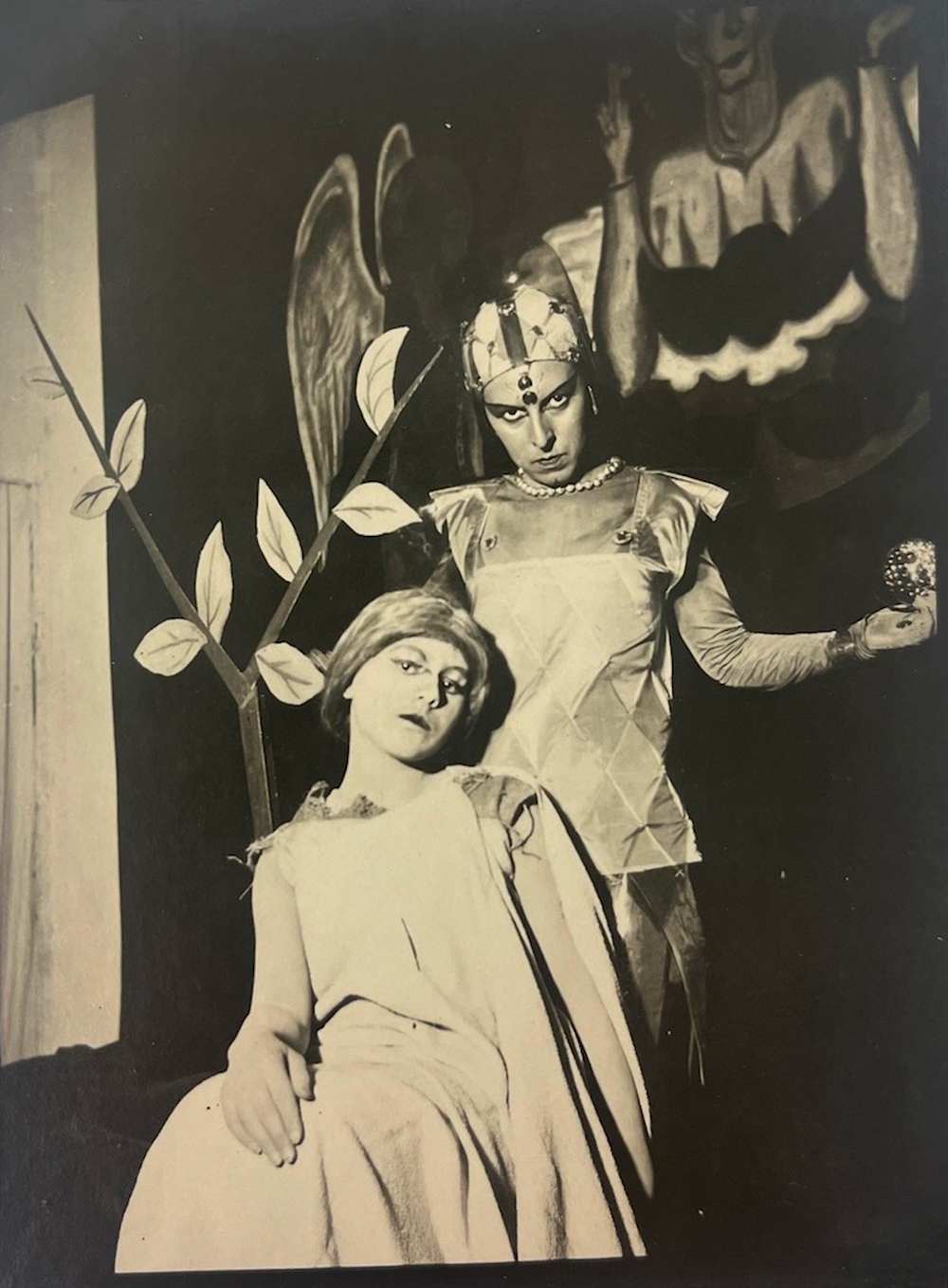
Claude Cahun, Théâtre de recherches dramatiques. Claude Cahun (autoportrait) et Solange Roussot dans Le Mystère d’ Adam , 1929; Courtesy of Galleria Alberta Pane
Queer identity has long been at the forefront of art and culture, with queer artists challenging conventions, making marginalised experiences visible and shaping wider conversations about identity and society. Frieze’s history offers a chance to trace some of those landmark moments.
Frieze London launched in 2003, the year Section 28 was repealed in England and Wales. That coincidence is worth lingering over, because Frieze London’s entire history has unfolded during a period in which queer culture has moved rapidly from legal and institutional restriction into visibility. You can trace some of that movement through the timeline of Frieze itself:
– In 2014, Tate acquired artist collective General Idea’s AIDS (Wallpaper Installation) via Frieze, showing how activism entered mainstream collections. That year, Frieze magazine explored what it meant to make queer art.
– In 2015, pioneering queer filmmaker Charles Atlas, co-creator of ‘media-dance’ (choreography made for the camera rather than the stage) received a Frieze Film commission.
– 2016 saw Galerie Buchholz reconstruct openly gay German photographer Wolfgang Tillmans’s debut 1993 gallery exhibition at Frieze.
– In 2017, the collective SPIT! (Sodomites, Perverts, Inverts Together!) brought queer activism to Frieze, performing LGBTQ+ manifestos, while Alison M Gingeras curated Sex Work: Feminist Art & Radical Politics, which showcased censored feminist art by radical talents such as Betty Tompkins and Marilyn Minter.
– In 2021, photographs by Sunil Gupta, whose work connects sexuality, migration and identity, were acquired for the Harris Museum via Frieze.
– In 2023, Frieze’s 20th anniversary, the team at LGBTQ+ non-profit charity and gallery space QueerCircle held a series of twice-daily LGBTQ+ tours. And artists like Elmgreen & Dragset, known for queering gallery conventions, featured in Frieze’s retrospective.
These moments show how art fairs such as Frieze open up space for queer culture to enter the mainstream, and why it’s important for challenging work to remain provocative.
What not to miss at Frieze
Queering Modernism
This year, Queering Modernism is a specially curated section of Frieze Masters, conceived by curator Anke Kempkes. Following her recent exhibition Queer Modernism 1900–1950 at Kunstsammlung Nordrhein-Westfalen (K20) in Düsseldorf, Kempkes brings a queer reading of 20th-century art to the fair.
There are many highlights, including Bahman Mohasses, a key Iranian avant-garde figure known for psychologically charged works, at Ab-Anbar Gallery. Claude Cahun’s self-portraits will be in dialogue with feminist provocateur Judy Chicago’s multidisciplinary works at Galleria Alberta Pane. Galerie Albrecht presents Ruth Bernhard’s striking female-nude photography. Luis Fernando Zapata’s ritual objects from the 1980s, made in response to the AIDS crisis, will appear at Elvira Moreno and Alonso Garcés galleries. And perhaps the most irresistible display will be the shared Victoria Miro and David Zwirner presentation of paintings by Alice Neel. Her portraits resist the sanitising effect that can occur when historical figures are retrospectively sorted into identity categories.
Throughout the fair
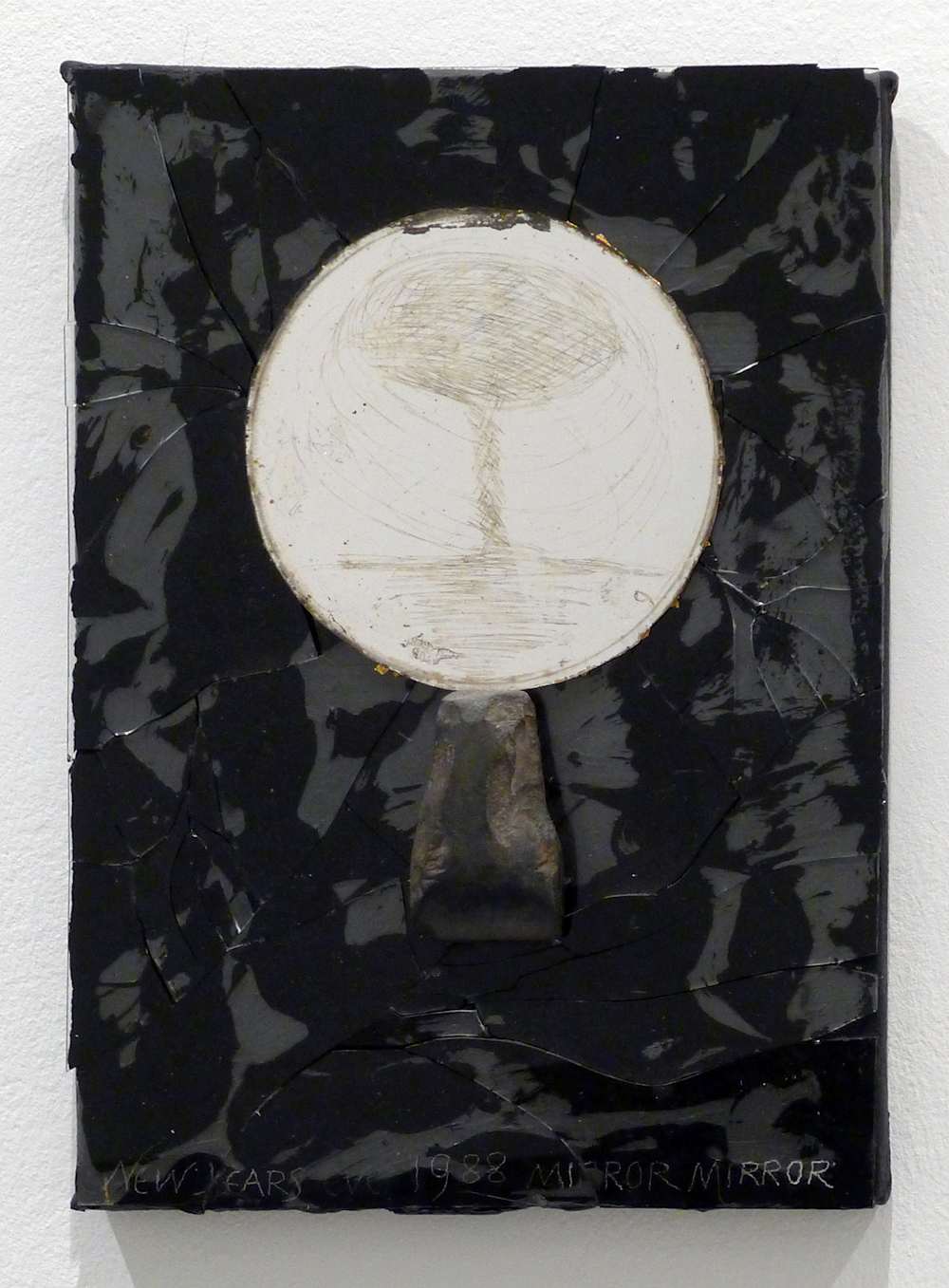
Work by Derek Jarman. Courtesy of Keith Collins Memorial Will Trust and Amanda Wilkinson, London
Company Gallery, in Booth B11, supports artists working across feminist and queer histories and subculture. Here, it brings together Colette Lumiere, Reba Maybury, Ambera Wellmann, Sergio Miguel and Joanne Robertson to explore themes of self-fashioning, power, eroticism, unstable identities and the social structures that determine who is allowed to look, speak or occupy space. Questions of representation and visibility continue at Amanda Wilkinson, where Derek Jarman, Joan Jonas and Ajamu X are on show. Jarman was a radical filmmaker, painter, writer, gardener and activist whose visual culture was shaped by AIDS, Thatcherism and the creation of beauty amid harshness. His works from the early 1980s will be shown alongside new work from Ajamu X, who has spent decades expanding the representation of Black queer bodies and desire, in photographic series, my play box.
Photography is central to Southern Guild Gallery’s presentation at Booth C1, where Zanele Muholi is showing alongside filmmaker Alex Hedison and performer Wura-Natasha Ogunji. Muholi’s long-running Faces and Phases archive of Black lesbian, trans and gender-nonconforming South Africans is a defining queer photographic project of the past two decades. At Wschód, in the Focus section, stories of queer life and the spaces that sustain it are in the spotlight. Lauren Smith’s paintings centre on the history of Huddersfield’s Gemini Club, a gay hangout which closed following police harassment, prompting the organisers of the UK’s national Pride march to move the event from London to Huddersfield in 1981 in an act of solidarity.
The spaces of queer life take on a different form at a. Squire gallery, also in the Focus section, where Ryan Huggins presents a project on German sex cinemas, including partitions and benches that recreate the architecture of a ‘porno cabin’. Throughout the fair, be sure to see how Gray Wielebinski has taken over Frieze London’s toilets. Commissioned by interdisciplinary creative platform Dean’s Bottom, Wielebinski’s Production is a sensory experience with urinal cakes and toilet-rim blocks encased within cages.
Itinerant project space Edel Assanti in Booth D17, will show immersive work by multimedia artist Jenkin van Zyl, in a site-specific installation based on artist Marcin Dudek’s Soviet-era childhood apartment in Kraków. And MUD/EMBANKMENT at Galeria Jaqueline Martins is part of Frieze’s Artist-to-Artist initiative. Nominated by Nigerian visual artist Otobong Nkanga, Jota Mombaça will present work combining painting, ceramics, video and raw earth. Her practice is grounded in decolonial thinking and alternative social and ecological imaginations, bringing another perspective to the breadth of queer practices represented across this year’s fair.
Beyond the tent
The free-to-visit, open-air exhibition Frieze Sculpture will run in the English Gardens until 1 November. The 2026 edition, curated by Fatoş Üstek, comprises 11 international artists exploring hybridity across social, material and environmental systems. A standout work is Ramesh Mario Nithiyendran’s Warrior Figure (2026), presented by Jhaveri Contemporary and Sullivan+Strumpf. The Colombo-born, Sydney-based artist works across ceramics, bronze, painting and installation, making hybrid figures that draw on South Asian sculptural traditions while exploring ideas of idolatry, autobiography, queer aesthetics and monumentality.
Stanislas Motz-Neidhart, La Mamounia 1
As an official partner of Frieze Week 2026, Smith will present To Seek, To Find, its first-ever photography exhibition, at Frieze’s permanent Mayfair gallery, No.9 Cork Street, around a 30-minute walk from Regent’s Park. The show is curated by Brandei Estes, Acting Senior Curator of Photographs at the National Portrait Gallery, and brings together 10 established and emerging photographers commissioned by Mr & Mrs Smith over the past two years, including Tina Barney, Axel Aurejac, Chayanee Chomsaengchun, Paolo Di Lucente, Kalpesh Lathigra, Dougal MacArthur, Stanislas Motz-Neidhart, Hannah Rose and Isabelle Young, alongside an exclusive, previously unseen photograph by the late, great Martin Parr. The title comes from the closing line of Tennyson’s Ulysses poem: ‘To strive, to seek, to find, and not to yield.’
To help further LGBTQ+ rights and make travel safe and fun for all, all profits from sales of editioned prints from the exhibition will be donated to Mr & Mrs Smith’s charity partner, the Human Dignity Trust. The UK-based charity organisation uses law to challenge the criminalisation of LGBT+ people around the world. Its work includes strategic litigation, legislative reform and offering free technical legal assistance to local activists and lawyers to challenge discriminatory laws.
To Seek, To Find, at No.9 Cork Street, Mayfair, will be open to the public from 16–17 October 2026, 10am–6pm. The exhibition is free to attend, with no booking required.
What else to see beyond Regent’s Park
Alongside Frieze there’s plenty of queer and LGBTQ+ art to digest across London’s galleries for a more edifying cultural takeaway. These cover tender moments caught on canvas by artists showing in the city for the first time, portraits by well-established photographers and politically charged sculpture.
These spaces act as useful correctives to the scale of Frieze, showing that culture is not only produced where the collectors travel to.
Queercircle
As always, LGBTQ+ charity Queercircle will be very active during Frieze and beyond. This month will see the launch of its new Queer Community Library, conceived not simply as a repository of books but as a space for preserving, sharing and creating queer knowledge. The library opens on 10 October with a day of talks, workshops, shared food and collective exchange, before remaining as a gathering and reading space through autumn and winter.
Queer Community Library launch: Saturday 10 October, 2pm–8.30pm, Queercircle, 3 Barton Yard, Soames Walk SE10 0BN. RSVP is required for the launch; the library programme continues throughout autumn and winter.
Curtain Up! at Dulwich Picture Gallery
Curtain Up! reconsiders the gallery’s collection of historical paintings, which is deeply connected to the theatre through performance, costume, gender and identity. These works are brought into dialogue with new works by contemporary artist and writer Rene Matić, figurative painter Lulu Bennett and multimedia artist Sin Wai Kin. Curated by Lucy West with writer and curator Gemma Rolls-Bentley, the display is part of Dulwich’s Unlocking Paintings series.
Until 25 October 2026, Dulwich Picture Gallery, 14 Gallery Road SE21 7AD. Entry included with gallery admission.
Sensual / Mutual at Auto Italia South East
Artist-run Auto Italia has spent years representing the intersection of experimental art, politics and queer community. Its current exhibition is Sensual / Mutual, the first major institutional solo exhibition in the UK by Del LaGrace Volcano. Surfacing unseen bodies of work from the 1970s and 1980s, the exhibition focuses on Volcano’s time in San Francisco and Santa Fe, tracing queer, feminist, leather-dyke, gender-variant and land-based communities in the process of making themselves visible. We were honoured that Volcano’s work was selected to feature on the cover of our book Queer Art.
During Frieze weekend, Volcano joins curator Orlan Ohtonen for a conversation about queer and trans visual culture, self-fashioning and collective life.
Until 25 October 2026, Auto Italia South East, 44 Bonner Road E2 9JS. Artist conversation: Saturday 17 October, 2pm–3pm; advance booking advised.
Louis Fratino’s Prose at David Zwirner
A beautiful presentation of highly personal works by emotive painter Fratino, in the artist’s first solo exhibition in London, which explores the everyday of private and public lives in bold colour.
Until 31 October 2026, David Zwirner, 24 Grafton Street W1S 4EZ.
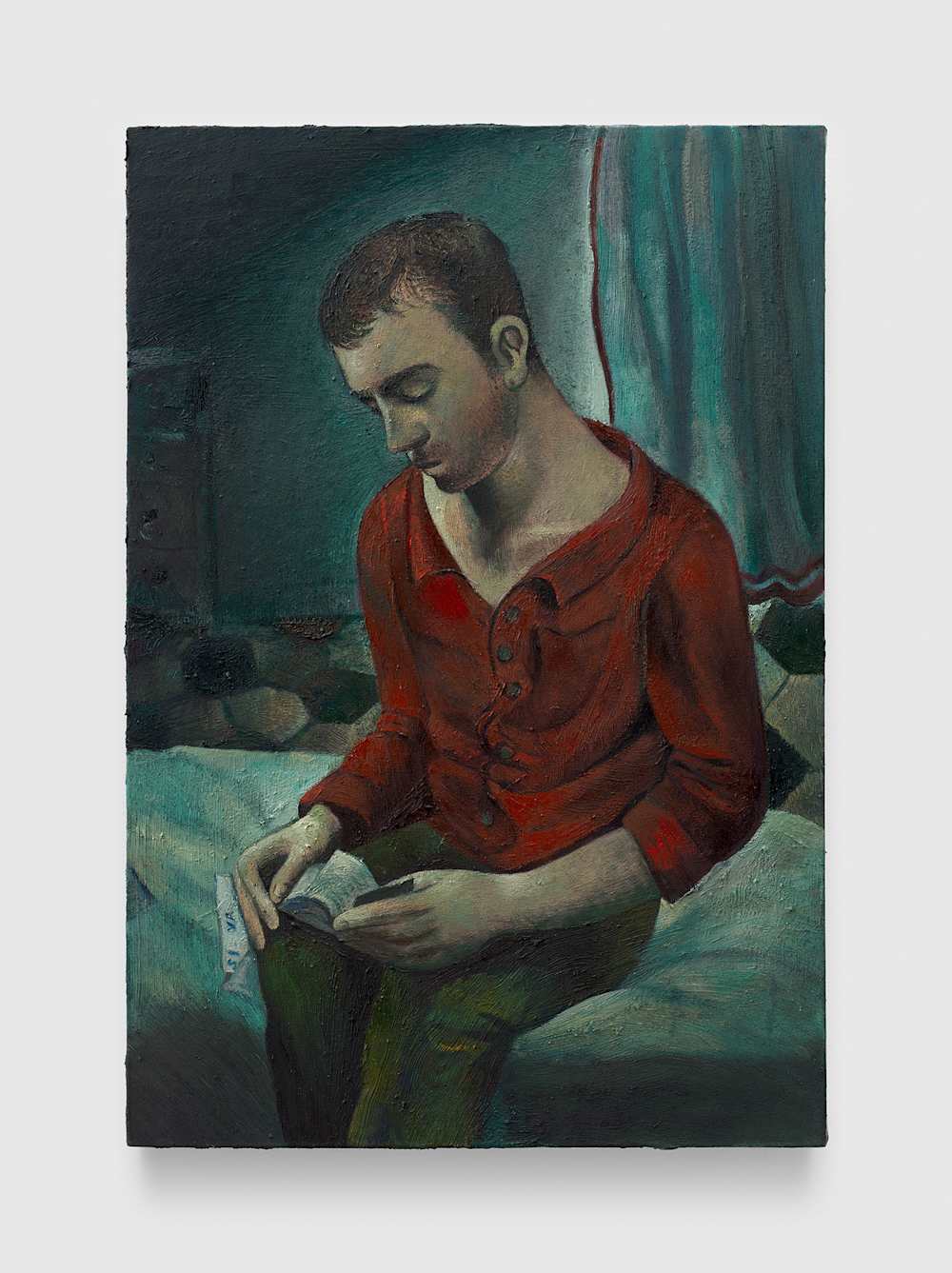
Louis Fratino, Alien in His Mom’s Bedroom (after Corot), 2026. Courtesy of the artist and David Zwirner. © Louis Fratino.
Harmony Hammond at Edel Assanti
At Edel Assanti’s St James’s space, American artist Harmony Hammond receives her first exhibition with the gallery. Hammond is a foundational figure in feminist and lesbian art history. In 1972 she co-founded A.I.R., the first women’s co-operative gallery in the United States, before helping establish influential journal Heresies: A Feminist Publication on Art and Politics. Her paintings, sculptures and installations have spent five decades challenging the assumption that abstraction must be politically neutral.
Until 13 November 2026, Edel Assanti, 11 Bury Street SW1Y 6AB.
Nicole Eisenman at Sadie Coles HQ
At Sadie Coles, French-born American painter Eisenman will showcase 10 new works made this year, spanning subjects from cosmological pondering to relationships and orgies.
Until 21 November 2026, Sadie Coles HQ, 17 Savile Row W1S 3PN.
Mira Schor: WET/London at Mimosa House
Mira Schor: WET/London is the American feminist artist’s first solo presentation in a publicly funded UK gallery. Schor has spent five decades insisting that painting can remain bodily, politically and intellectually unruly. The paintings in this show examine autonomy and the power of language made material on canvas, curated by Daria Han.
Until 5 December 2026, Mimosa House, 47 Theobalds Road WC1X 8SP.
The Great Room at Studio Voltaire
At Studio Voltaire, American artist Katherine Hubbard presents the sculpture and photography installation The Great Room, her first institutional solo exhibition outside the US. It focuses on her relationship with her mother who had a progressive brain disease, and covers themes of illness, memory and loss.
Until 10 January 2027, Studio Voltaire, 1A Nelsons Row SW4 7JR. Free to enter.
Salman Toor: Someone Like You at The Courtauld
Born in Lahore and based in New York, Toor paints queer metropolitan life in luminous, arsenic-hued greens: friends collapsing into sofas, men waiting at doors, parties, bars, phones, stolen glances and the uneasy intimacy of being watched. The Courtauld exhibition (which is Toor’s first solo museum show in Europe) presents 19 paintings made since 2019 alongside drawings.
Until 10 January 2027, The Courtauld Gallery, Somerset House, Strand, London WC2R 0RN. Booking is recommended.
Tim Walker’s Fairyland: Love and Legends at the National Portrait Gallery
Tim Walker’s Fairyland: Love and Legends showcases around 250 specially created portraits made over five years with queer sitters and allies, among them filmmaker Isaac Julien, actors Ian McKellen and Miriam Margolyes, and singer Chappell Roan. The show is an unabashed exploration of queer identity, community and love.
Until 7 February 2027, National Portrait Gallery, St Martin’s Place WC2H 0HE. Booking recommended.
Charan Singh: Your Tongue in my Mouth at Autograph
Your Tongue in my Mouth examines how British colonial rule imposed rigid controls on gender expression and intimacy in India, criminalising long-established third gender, queer and trans communities through the photography of Charan Singh. The exhibition is curated by Bindi Vora, whose own work examines postcolonial histories and diasporic identity.
Until 13 February 2027, Autograph, Rivington Pl EC2A 3BA. Free to enter.
More dates for your diary
Amelia Abraham with Sunil Gupta: Sex, Clubs, Dissent
14 October 2026, 6.30pm
Queer Britain
Author Amelia Abraham and artist Sunil Gupta discuss the new book Sex, Clubs, Dissent, tracing the visual history of queer nightlife, followed by a Q&A and book signing. Booking required.
We Are Queer Britain
During Frieze Week, National Theatre opening hours
Lyttelton Lounge, National Theatre
A free photography exhibition curated by Queer Britain documents early Pride movements, trans pioneers, activists, politicians and cultural figures who helped shape contemporary queer life. No ticket required.
Standard Talks: Anderson Asteclines
15 October 2026, 6–7pm
The Library Lounge, The Standard, London
Brazilian painter Anderson Asteclines joins Frieze’s Matthew McLean to discuss queer encounters, memory, intimacy and desire, from Brasília to London’s parks. RSVP required.
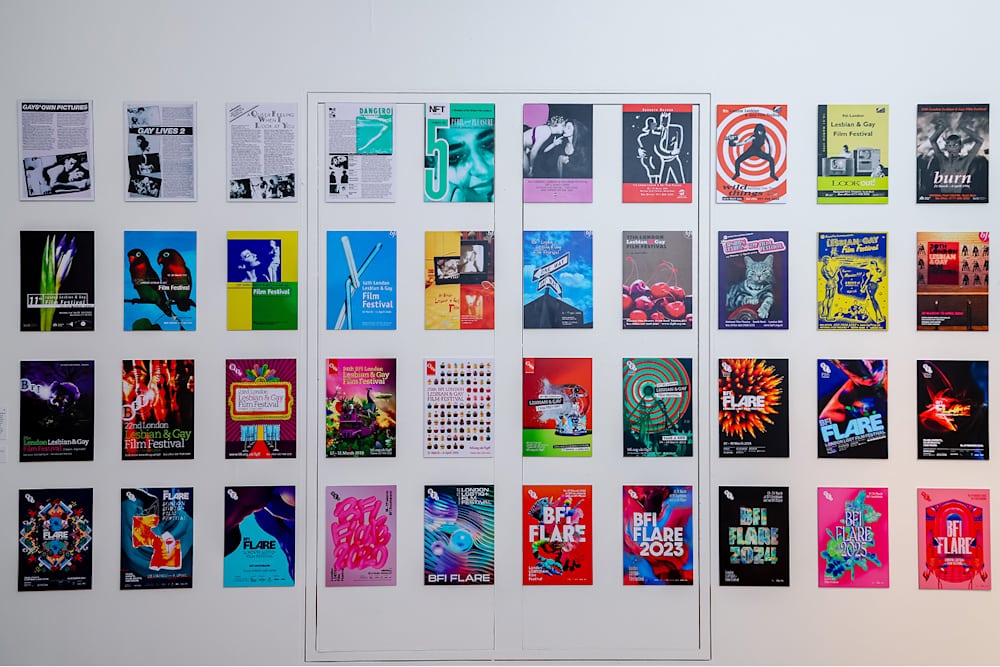
40 Years of BFI Flare Display at Queer Britain Museum. Credit: Rahil Ahmad for Queer Britain Museum
The Gaze, Reconfigured: Private View
16 October 2026, 7–9pm
The Outsiders Gallery at VFDalston, 64–66 Stoke Newington Road, N16
The inaugural exhibition from queer collective KETTLEPOT challenges the cis-heterosexual male gaze and foregrounds queer women, trans and non-binary artists. Free advance ticket required; currently sold out.
Blacktober Fest 2026: Beyond the Month. Beyond the Moment
16 October 2026, 6pm–3am
Colour Factory, Hackney Wick
UK Black Pride brings together Black queer DJs, live performance, artists, creatives, community organisations and independent stalls in a celebration of culture beyond the commercial art fair. Tickets from £15.
Del LaGrace Volcano and Orlan Ohtonen in Conversation
17 October 2026, 2–3pm
Auto Italia, 44 Bonner Road, Bethnal Green
Del LaGrace Volcano and the curator Orlan Ohtonen discuss Volcano’s current exhibition, Sensual / Mutual, queer and trans image-making, leather-dyke and gender-variant communities, self-fashioning and five decades of collaborative photographic practice. Advance booking recommended.
Frieze London and Frieze Masters run 14–18 October 2026 in Regent’s Park. Wednesday 14 October is invitation-only; public admission begins on Thursday 15 October. Tickets are date- and time-specific and sold online.
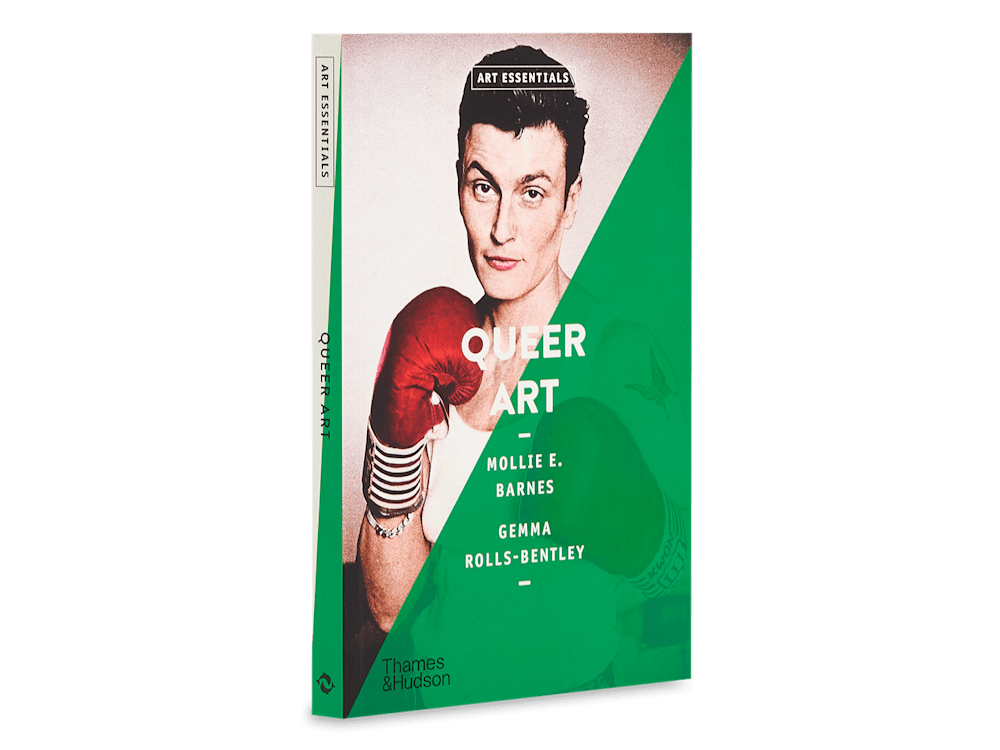
‘Art Essentials: Queer Art’, written by Mollie E. Barnes and Gemma Rolls-Bentley, is a commanding compendium of LGBTQIA+ art that highlights its ongoing resilience from the 19th century to the present day.
Header image: Ruth Bernhard, Moonrise, 1962. Courtesy Galerie Albrecht
