

In the Tate’s J.M.W Turner collection is a small watercolour called The Artist’s Bedroom in the Hotel Europa (Palazzo Giustinian), Venice, with the City Beyond (1840), depicting the painter’s second visit to the Floating City. It shows St Mark’s Campanile and a scatter of terracotta rooftops, glimpsed through a window. But the room itself dominates the paper, washed in diluted candy colours like Murano glass — the hint of a canopied bed here, the decorative lines of a frescoed ceiling there. The noted English painter isn’t known for works like these, famed more for his incandescent sea- and landscapes. Why, then, did he choose to paint the inside of his hotel room?
Artists love hotels. The mythology of great artists and that of great hotels are intertwined. Public art galleries and museums began opening en masse in the 18th century, just as the humble coaching inn was evolving into what we might recognise as a hotel today — not quite The Pig, but certainly an upgrade from a hayloft. Gentlemen artists making the Grand Tour across Europe would stay at lodging houses when not crashing with wealthy foreign friends or renting a villa. For an artist of fewer means, a boarding house or pensione was an affordable place to rest after days spent sketching sinewy marble thighs in the Uffizi or admiring the carved drapery of the Parthenon pediments (before Lord Elgin pilfered them).
Rooms for possibility
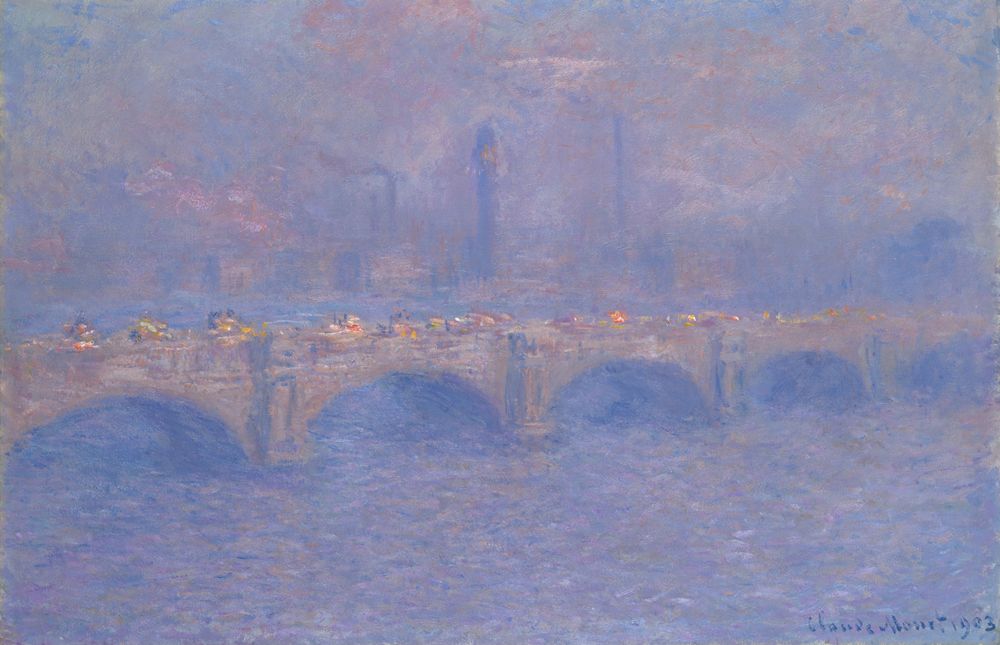
Claude Monet, Waterloo Bridge, Sunlight Effect, 1903
The hotel facilitated art: its creation, discovery and circulation. And it offered more than a place to stay. On three separate visits to London, in 1899, 1900 and 1901, with the intention of painting the River Thames, then enveloped in sulphurous smog, Claude Monet chose The Savoy to host him. (By 1904 he complained it had become ‘too sumptuous’, if you can imagine.) He took two rooms, one for sleeping, one for painting, with the furniture removed and a balcony for capturing the view. ‘Although The Savoy’s location [overlooking the river] was no doubt the primary attraction,’ the catalogue for the Atlanta High Museum of Art’s 1988–1989 exhibition Monet in London describes, ‘Monet certainly enjoyed good food and comfortable surroundings, and at this point in his career he could afford them.’
There is something charmingly incongruous about imagining the pioneer of en plein air painting, known for his waterlilies, being coddled by chambermaids. But at a hotel, the artist’s only responsibility is to himself — matters like changing the bedsheets are for the staff to think about. The artist need only create.
Behind closed doors
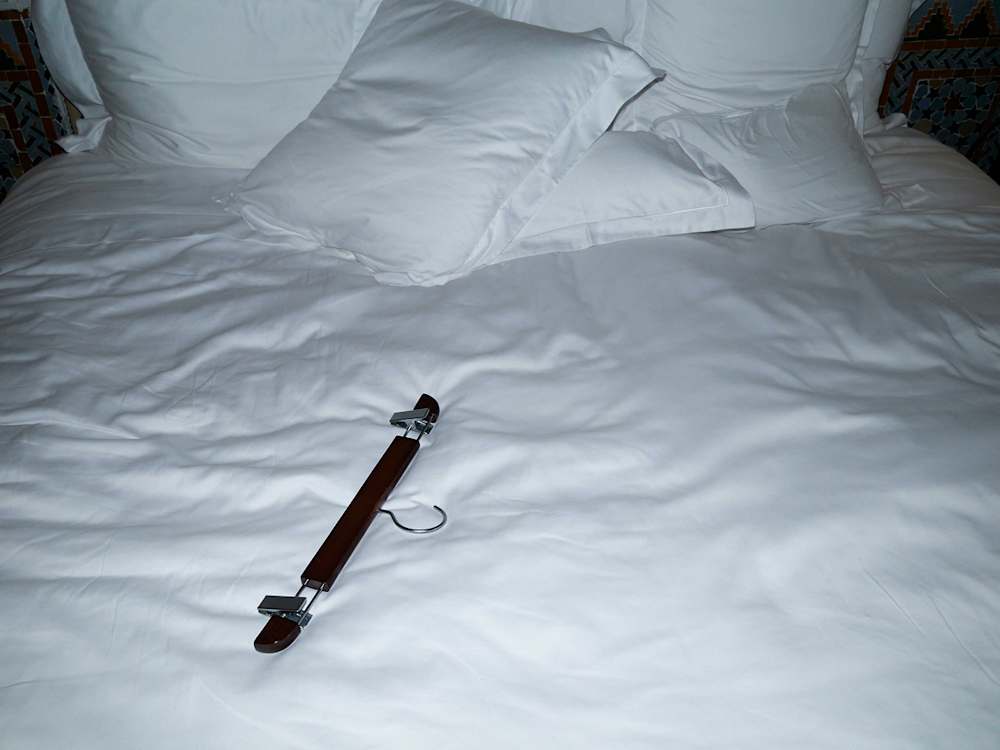
La Mamounia
In this liminal space, the artist may create a new identity. British statesman Winston Churchill often stayed in La Mamounia, Marrakech, and spent time painting in his room; in fact, the only painting he completed throughout the Second World War was done within the hotel’s art deco confines. Perhaps there, reality felt briefly suspended. John Lennon and Yoko Ono subverted the intimacy of a honeymoon, turning their suite into a performance with their Bed-in for Peace protests — staged first in Amsterdam’s Hilton and then Montreal’s Queen Elizabeth Hotel, both in 1969. The newlyweds invited the press into their bedroom and remained under the covers for days to protest the Vietnam War. They made the private public, the rented marital bed a platform for political dissent.
At The Algonquin Hotel in New York, a decade of daily luncheons took place in The Rose Room restaurant. Dubbed the Algonquin Round Table (or the ‘Vicious Circle’), it was where the likes of Dorothy Parker, Marc Connelly, Harold Ross and Tallulah Bankhead exchanged wisecracks and witticisms. And Joan Didion’s detachment and seeming ambivalence are bound up with hotels she frequented and wrote about; transient places from which she could observe, at a comfortable distance.
Creative spaces
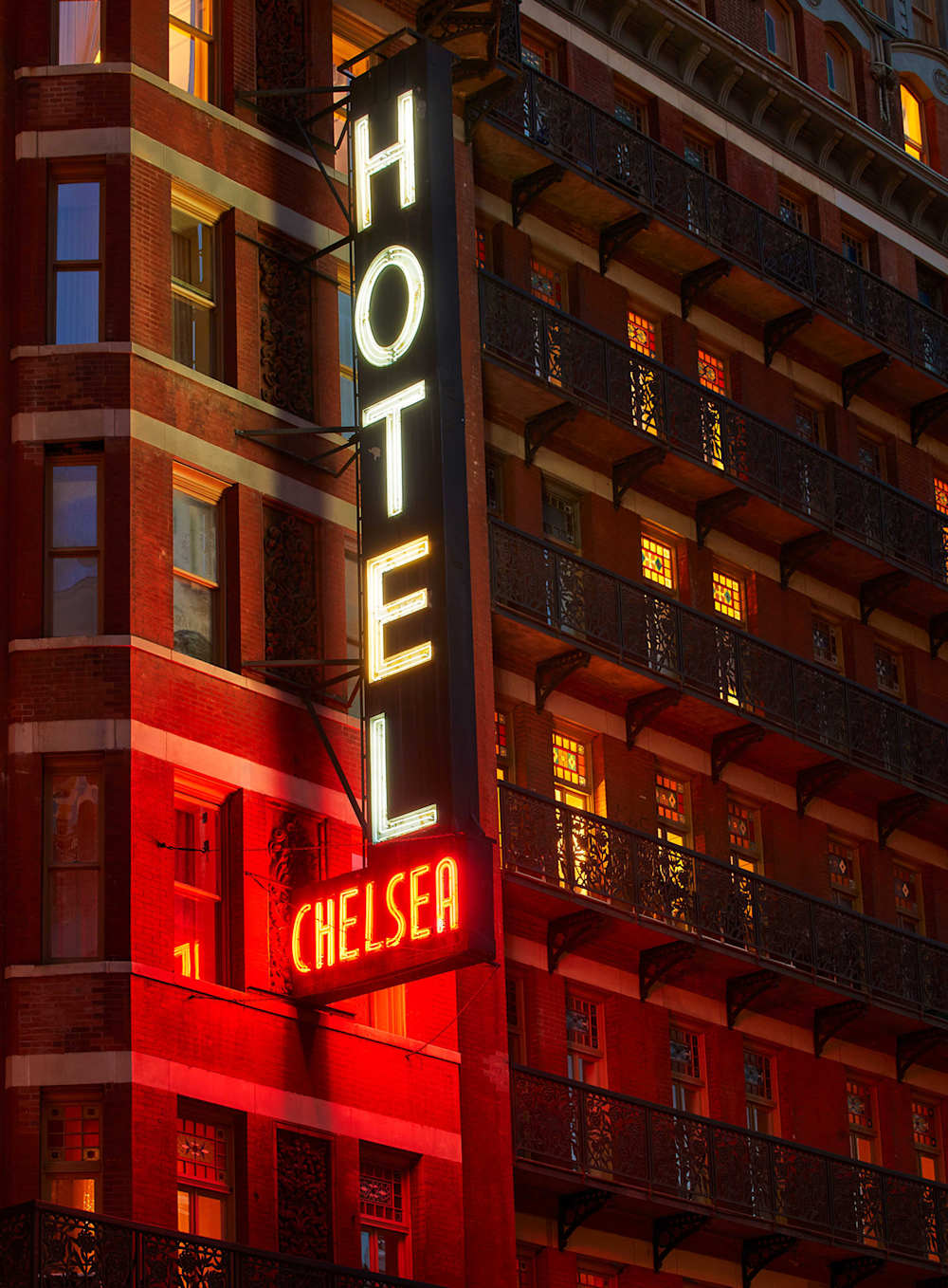
Chelsea Hotel
Hotels have long been creative haunts. The most illustrious is surely New York’s Chelsea Hotel, now a byword for bohemianism. In James Lough’s oral history, This Ain’t No Holiday Inn: Down and Out at the Chelsea Hotel 1980–1995, he calls the Chelsea ‘a culture factory on hyper drive’. Stanley Bard, its infamous manager, allegedly accepted art from tenants in lieu of rent — a claim he denied — but his 2017 obituary in The New York Times still dubbed him a ‘Robin Hood of innkeepers’. He certainly had a knack for talent-spotting and was lenient on those with promise, allowing them to rack up substantial debts for their room over a period of years on the understanding that, when they made it big, they’d cough up. Some did, some didn’t, but it was a shrewd investment for the hotel nonetheless, which still benefits from the reputations of those who stayed within its walls, enshrining its legacy as a sanctuary for the artistic, from composers to Beat poets to photographers.
Christo and Jeanne-Claude, Sherill Tippins writes in Inside the Dream Palace, arrived at the Chelsea looking for community: ‘Surrounded by other artists, all of them “crazy”, the couple, not yet 30, felt normal for the first time in their lives.’ For Patti Smith, being at the Chelsea allowed her to walk among ghosts. ‘I loved this place, its shabby elegance, and the history it held so possessively,’ she wrote in Just Kids. ‘So many had written, conversed, and convulsed in these Victorian dollhouse rooms. So many skirts had swished these worn marble stairs. So many transient souls had espoused, made a mark, and succumbed here. I sniffed out their spirits as I silently scurried from floor to floor.’
If some beelined to the hotel to be part of an artistic canon — or to hobnob — others sought privacy. As Arthur Miller recalled in his 2002 Granta essay: ‘I decided to move to the Chelsea in 1960 for the privacy I was promised.’ It offered solitude among strangers. It’s no coincidence that Greta Garbo’s famous ‘I want to be alone’ line comes from the film Grand Hotel (1932).
The art of staying
Stillness and detachment are oft-explored themes when the hotel itself is the subject matter. Turner’s Venice sketch is one example, but it’s a tradition showcased across mediums. Physical proximity and emotional distance are hallmarks of Edward Hopper’s work. In Hotel Window, 1955, a smartly dressed woman stares out through the window of an anonymous hotel lobby — she is alone, but a busier scene is suggested beyond her gaze. In Sofia Coppola’s 2003 film Lost in Translation, protagonists Bob and Charlotte’s disillusionment is evoked in lingering shots of Tokyo’s Park Hyatt Hotel. The uniformity of Wes Anderson’s visual world, and his exploration of tension against a backdrop of loveliness, reached its apex in 2014 with The Grand Budapest Hotel.
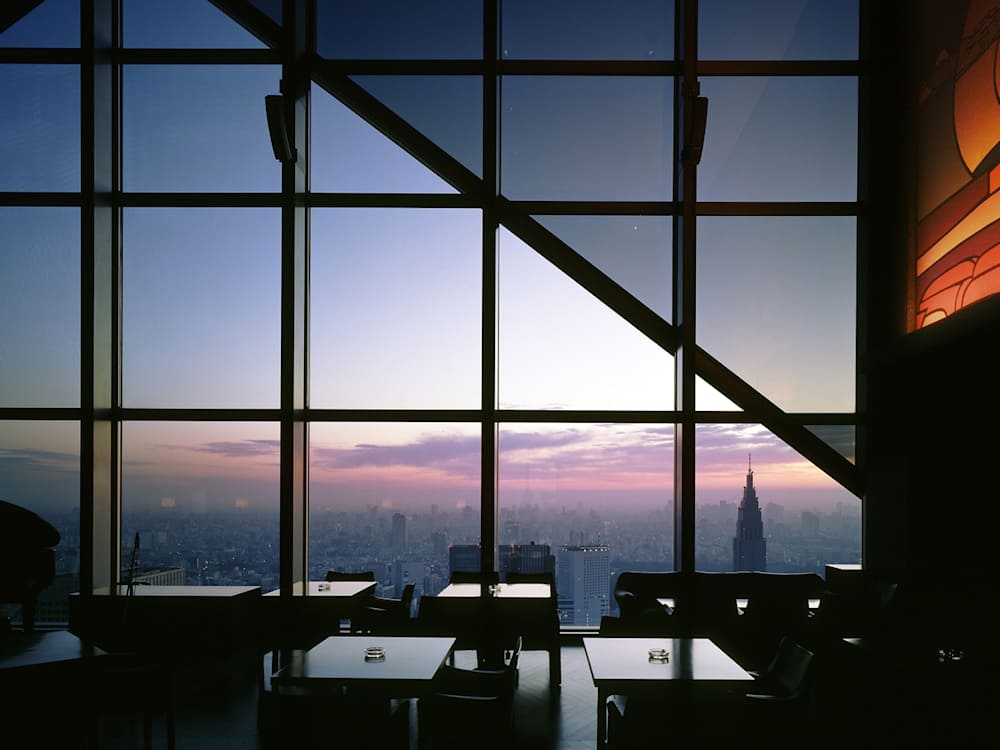
Park Hyatt Tokyo
Sometimes, the hotel itself becomes the artwork: London’s Eel Pie Hotel was taken over by hippies in the late 1960s and given a psychedelic makeover before mysteriously burning down. In the south of France, La Colombe d’Or Hotel has a Matisse-designed menu and a Calder mobile hanging above its pool, and Pavillon Southway in Marseille describes itself as a ‘comprehensive domestic project’, decorated with works by artists who create in its on-site studio.
Don Henley’s description of The Eagles’ song Hotel California feels apt here: ‘[It] deals with traditional or classical themes of conflict: darkness and light, good and evil, youth and age, the spiritual versus the secular.’ The dialectical nature of the hotel makes it both a uniquely creative environment and rich motif: it provides privacy without ownership and the opportunity to be both anonymous and an idealised version of yourself. A great hotel changes how you feel, think and see.
Perhaps this is what Turner understood about hotels, even if he never intended his little watercolour to be a manifesto for them. The view of Venice is there, framed in the window, but it’s the intimacy of the room that holds our attention: the colours, the furnishings, the transient moments of life. In a hotel room, even Turner could turn his gaze away from the sublime and towards the ordinary business of being alive. The world would still be there tomorrow. For now, he had a room of his own, however temporary.
Seek out the muse in our art-led hotels, or see how Mr & Mrs Smith’s stable of photographers were inspired by hotels around the world at its first art show, To Seek, To Find
India Birgitta Jarvis is an editor and writer specialising in fashion, beauty, art, interiors and culture — with a particular interest in stories that bridge aesthetics and visual culture, history, and social consciousness.
